
Paper mosaics are a great way to revisit patterns and develop more complex designs. I like to connect this lesson with mandalas or Art from Ancient times.



 Part I: Using pre-printed mandalas students create the shell of their turtle using ccolor pencils, metallic color pencils and crayons . Review the color wheel and use of complimentary colors and or warm and cool colors color with a purpose
 Part I: Pre cut red rectangles and squares, students create a basic "human" robot form. One head at the top, body in the middle, two arms out of the sides of the body (not the head) two legs located below the main body.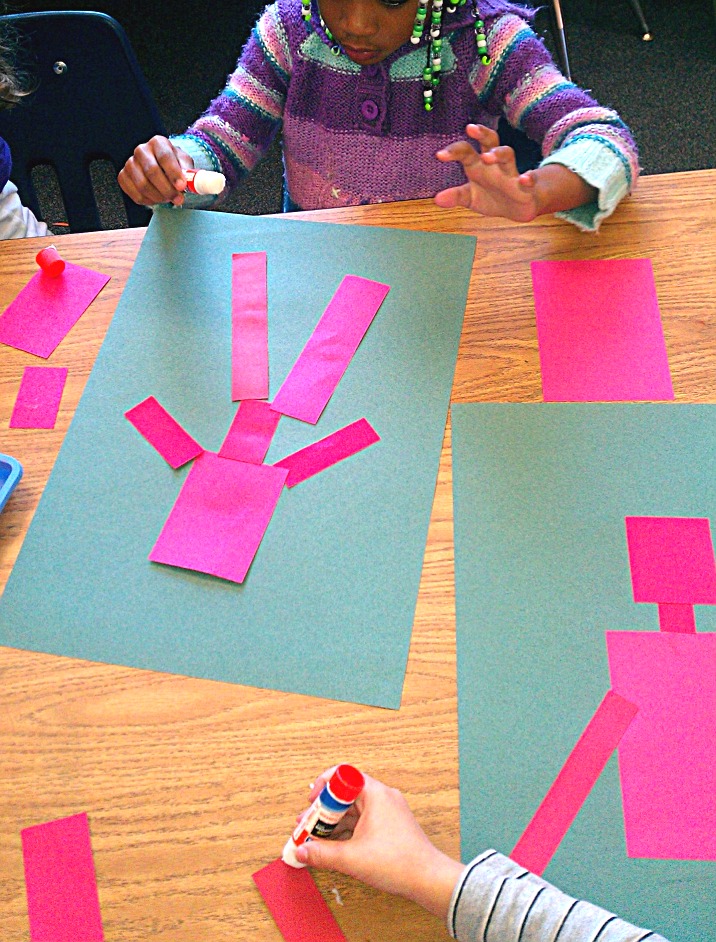


 Students grades Kinder-3rd were given the opportunity to explore nature using their artist's eye. They drew and painted, cats, snakes, bats, and birds.

 This 6 session class was designed to give students grades 3-6 a chance to design and create their own Recycle Robot. First we did a sketchbook and collected ideas about what a robot is or can be. Students brought in items for the project such as plastic bottles and food containers, corks, wire, cardboard tubes, buttons, lids...and we created a junkyard. With adult supervision they used hot glue to assemble their creations. The robots were spray painted silver/chrome.


 This 4 part project involves direct drawing, cutting, gluing, painting, and print making as well as collage techniques and coloring.


 Inspired by the color wheel this 2 part projects connects to several art standards and can be designed to support numerous classroom themes.


